Welcome to tagrissoandme.co.uk*

This website is intended only for UK patients who have been prescribed TAGRISSO® (osimertinib)

*This website has been produced and funded by AstraZeneca UK.

I am not a UK TAGRISSO patient
This website is only intended for UK patients who have been prescribed TAGRISSO® (osimertinib)
Logo
☰
  • Home
  • Know your lung cancer
    • Lung cancer diagnosis
    • Biomarker Testing
  • About osimertinib
    • What is osimertinib?
    • How to take osimertinib
  • Managing side effects
    • Potential side effects
    • Tips on managing side effects
  • Treatment for your lung cancer stage
  • Support
    • Lung cancer support organisations
    • Resources
    • FAQs
 

Treatment for your lung cancer stage

Learn more about how osimertinib is used
to treat different stages of NSCLC.

  • Home
  • Treatment for your lung cancer stage

Your doctor has prescribed osimertinib as part of your treatment plan for EGFRm NSCLC. The role of osimertinib will depend on which stage of NSCLC you have been diagnosed with and the treatment plan you have discussed with your healthcare team.


Click through the links below to find out more.


The stages of NSCLC Your treatment plan Finding support

The stages of NSCLC

Healthcare teams use ‘stages 1, 2, 3 and 4’ when diagnosing cancer to describe how far a person’s cancer has grown and spread. Sometimes, you may see these stages written using Roman numerals (Stage 1 = Stage I, Stage 2 = Stage II, Stage 3 = Stage III and Stage 4 = Stage IV). Letters, like A, B or C, may also be used to further divide these stages.1,2
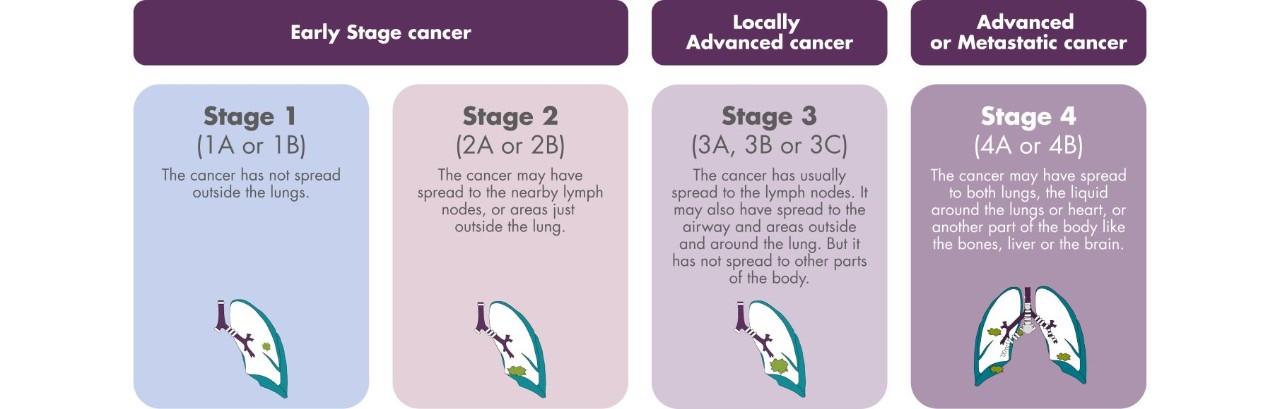
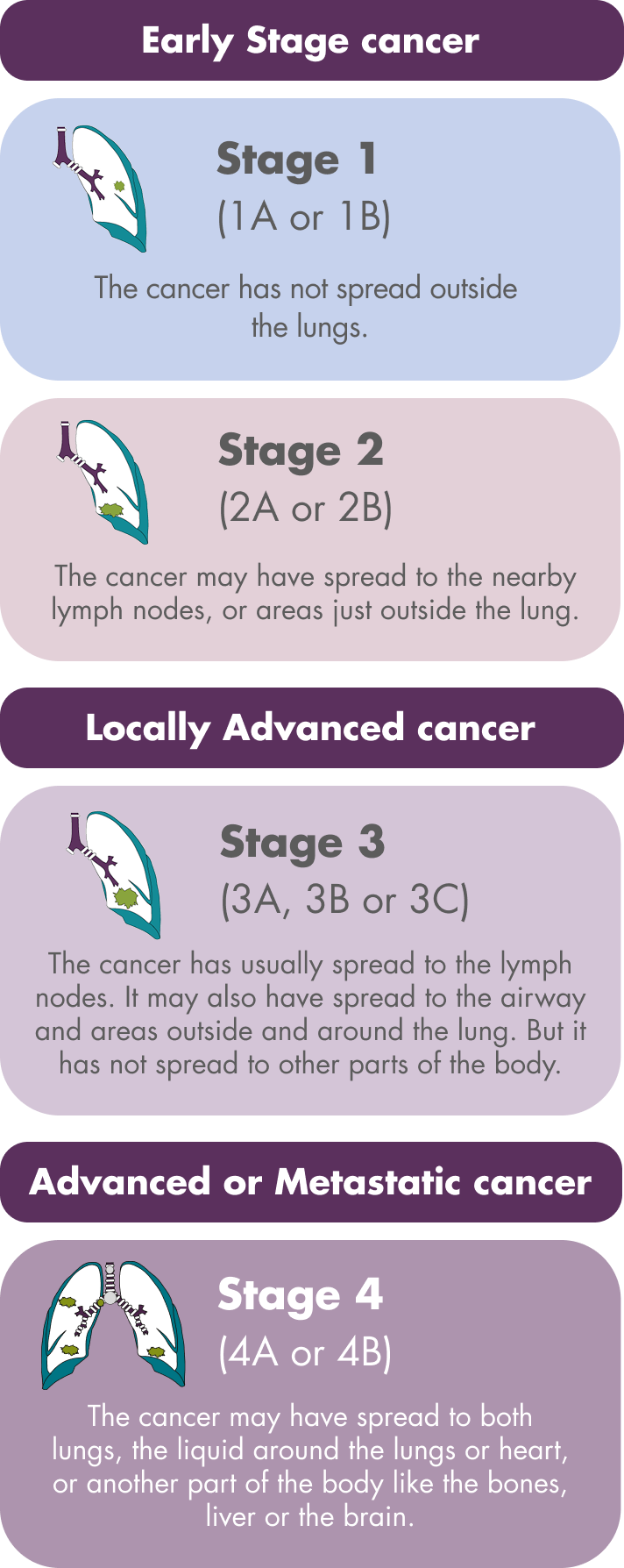


When assessing your cancer stage, your healthcare team will look at tumour size and whether it has spread to the lymph nodes or other parts of the body.1


  • A lymph node is a small group of cells in a bean-shaped structure that helps your body to fight infections and disease as part of the immune system (part of the body’s way of protecting itself)3


Finding out which stage of NSCLC you have is really important to help your doctor know which treatments to use, and when.


Your treatment plan

The decision to prescribe osimertinib alone, or with chemotherapy or chemoradiotherapy, will have been made with your healthcare team. They will have recommended a treatment plan based on your individual needs and treatment goals.


Click on the relevant stage below to find out more about your treatment plan.


Osimertinib may be used as something called an ‘adjuvant treatment’ in people who:4,5


  • Have 1B, 2A or 2B early-stage EGFRm NSCLC and


  • Have already had surgery to completely remove the cancer


Some people with stage 3A locally advanced EGFRm NSCLC may be eligible for osimertinib if their cancer was able to be completely removed by surgery.

 
What is adjuvant treatment?

You may hear the term ‘adjuvant treatment’ used in discussions with your healthcare team. But what does this term mean?
 
Many people with early-stage EGFRm NSCLC have surgery to completely remove the cancer. To help lower the chance of the cancer coming back, some people have further treatment after surgery. This post-surgery treatment is known as ‘adjuvant treatment’.6,7


Osimertinib can be prescribed to people who:4,5


  • Have stages 3A, 3B or 3C locally advanced EGFRm NSCLC and


  • Have cancer that cannot be removed by surgery and


  • Have cancer that has not gotten worse during or after chemoradiotherapy

 
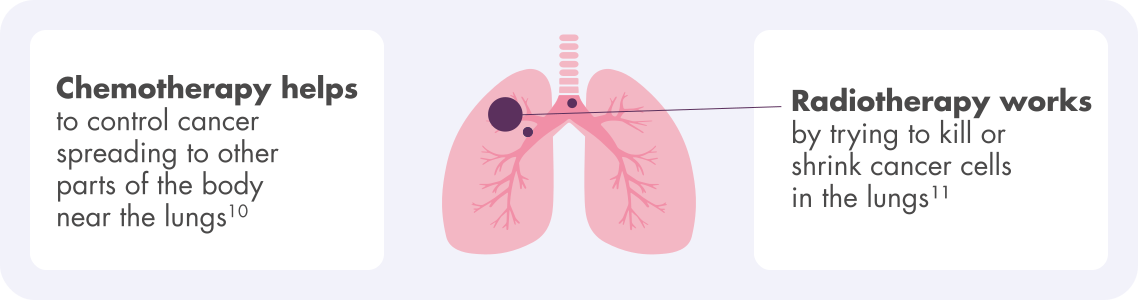
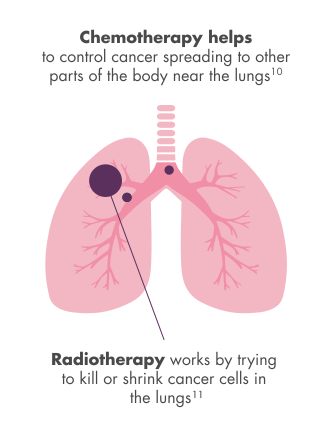
What is chemoradiotherapy?

Some people have locally advanced EGFRm NSCLC (stages 3A, 3B and 3C) that cannot be removed by surgery.8 When this happens, they may have a treatment called ‘chemoradiotherapy’. This is when the treatment combines both ‘chemotherapy’ and ‘radiotherapy’.9
Osimertinib may be prescribed as a first-line treatment (the first treatment given for a disease) to people who:4,5,12


  • Have stages 4A or 4B advanced EGFRm NSCLC and


  • Have not already had treatment for advanced EGFRm NSCLC
     

Some people with stages 3B or 3C locally advanced disease may also be eligible for this treatment.13,14
 
You may receive osimertinib either alone, or with a type of treatment called ‘chemotherapy’. The choice of whether you receive chemotherapy with osimertinib will depend on your individual needs and treatment goals.
 

What is chemotherapy?

Chemotherapy is a type of treatment that destroys cancer cells in a different way to osimertinib. It works by using something known as ‘cytotoxic’ (toxic to cells) drugs to kill cancer cells. This can also affect other cells in the body. These healthy cells can usually recover from damage caused by chemotherapy but affected cancer cells can find it harder to recover, and they eventually die.10
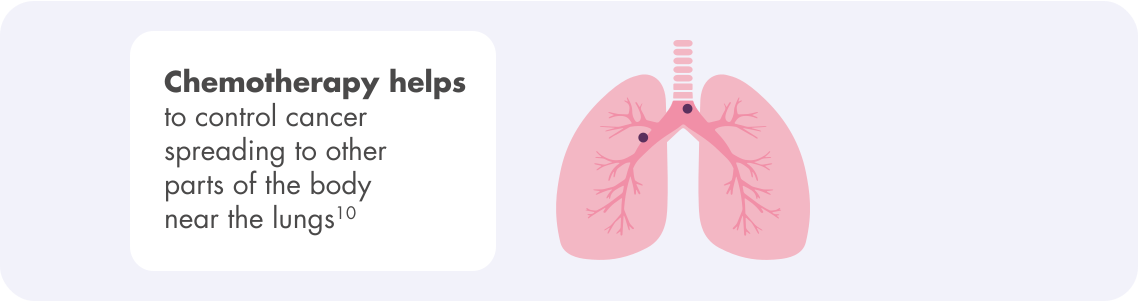
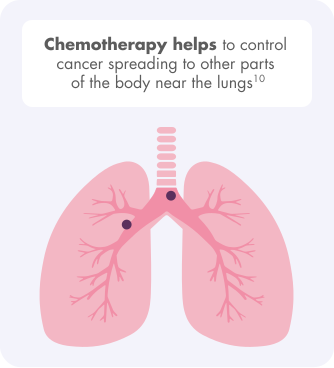
 

The chemotherapy drugs given with osimertinib are usually given through a tube that goes into your veins. This is known as ‘intravenous (IV) infusion’ and will be managed by your healthcare team. Chemotherapy is given in ‘treatment cycles’. This involves receiving chemotherapy before a rest period. Each treatment cycle usually lasts 21 days (treatment is given once every 3 weeks).5,10


There are several chemotherapy drugs your doctor may have prescribed you alongside osimertinib, including:5


  • Carboplatin or cisplatin – given for up to 4 treatment cycles


  • Pemetrexed – given until the cancer progresses or there is unacceptable toxicity (such as severe side effects)


Where can I find out more about treatment with osimertinib?

Explore the Resources page for a range of supportive guides and informative animations, and hear from other people living with EGFRm NSCLC about their experiences.

Visit now

Learn more about the possible side effects of your treatment.

Read more

Explore guidance on how to take
osimertinib.

Find out more
contact icon

Remember you are not alone – talk to your doctor or healthcare team if you have any questions.

Back 
to top


References:

  1. Cancer Research UK (CRUK). Stages of cancer. Available at: https://www.cancerresearchuk.org/about-cancer/what-is-cancer/stages-of-cancer. Accessed October 2026.
  2. ESMO Patient Guide Series based on the ESMO Clinical Practice Guidelines. What is Non-Small-Cell Lung Cancer? Available at: https://dam.esmo.org/image/upload/v1737550922/EN%20%7C%20Non-Small-Cell%20Lung%20Cancer:%20Guide%20for%20Patients.pdf. Accessed October 2026.
  3. National Cancer Institute (NCI). Lymph node. Available at: https://www.cancer.gov/publications/dictionaries/cancer-terms/def/lymph-node. Accessed October 2026.
  4. Tagrisso 40 mg and 80 mg film coated tablets. Patient Information Leaflet.
  5. Tagrisso 40 mg and 80 mg film coated tablets. Summary of product characteristics.
  6. Wu YL, et al. Osimertinib in Resected EGFR-Mutated Non-Small-Cell Lung Cancer. N Engl J Med. 2020;383(18):1711–1723. 
  7. National Cancer Institute (NCI). Adjuvant therapy. Available at: https://www.cancer.gov/publications/dictionaries/cancer-terms/def/adjuvant-therapy. Accessed October 2026.
  8. Lu S, et al. Osimertinib after Chemoradiotherapy in Stage III EGFR-Mutated NSCLC. N Engl J Med. 2024;391(7):585–597.
  9. Cancer Research UK (CRUK). Having chemoradiotherapy for lung cancer. Available at: https://www.cancerresearchuk.org/about-cancer/lung-cancer/treatment/chemoradiotherapy/having-chemoradiotherapy. Accessed October 2026.
  10. Macmillan Cancer Support. Chemotherapy. Available at: https://www.macmillan.org.uk/cancer-information-and-support/treatment/types-of-treatment/chemotherapy.
Accessed October 2026.
  11. Macmillan Cancer Support. Radiotherapy. Available at: https://www.macmillan.org.uk/cancer-information-and-support/treatment/types-of-treatment/radiotherapy. Accessed October 2026.
  12. National Cancer Institute (NCI). First-line therapy. Available at: https://www.cancer.gov/publications/dictionaries/cancer-terms/def/first-line-therapy. Accessed October 2026.
  13. Planchard D, et al. Osimertinib with or without Chemotherapy in EGFR-Mutated Advanced NSCLC. N Engl J Med. 2023;389(21):1935–1948.
  14. Soria JC, et al. Osimertinib in Untreated EGFR-Mutated Advanced Non-Small-Cell Lung Cancer. N Engl J Med. 2018;378(2):113–125.


GB-76835 | DOP: October 2026


This website is only intended for UK patients who have been prescribed TAGRISSO® (osimertinib), which is indicated after surgery in adults with stage 1B-3A NSCLC with a particular EGFR mutation, and also in locally advanced or metastatic NSCLC with a particular EGFR mutation. It does not replace the Patient Information Leaflet, which you can find in the carton containing your medicine and which you should read alongside this information. If you have any questions about your treatment, talk to your healthcare team or refer to the Patient Information Leaflet.

Reporting side effects

If you get any side effects, talk to your doctor, nurse or pharmacist. This includes any possible side effects not listed in the Patient Information Leaflet. You can also report side effects directly via the Yellow Card Scheme, website: https://yellowcard.mhra.gov.uk. By reporting side effects you can help provide more information on the safety of medicines.

Side effects can also be reported to AstraZeneca in the following ways:

Online: https://contactazmedical.astrazeneca.com

Email: Medical.InformationUK@astrazeneca.com

No imagery of real patients has been used on this site.

  • Legal Notice and Terms of Use
  • Privacy Notice
  • Cookie Policy
  • Contact us

© AstraZeneca 2026. All rights reserved

GB-76796| DOP: October 2026

AstraZeneca logo